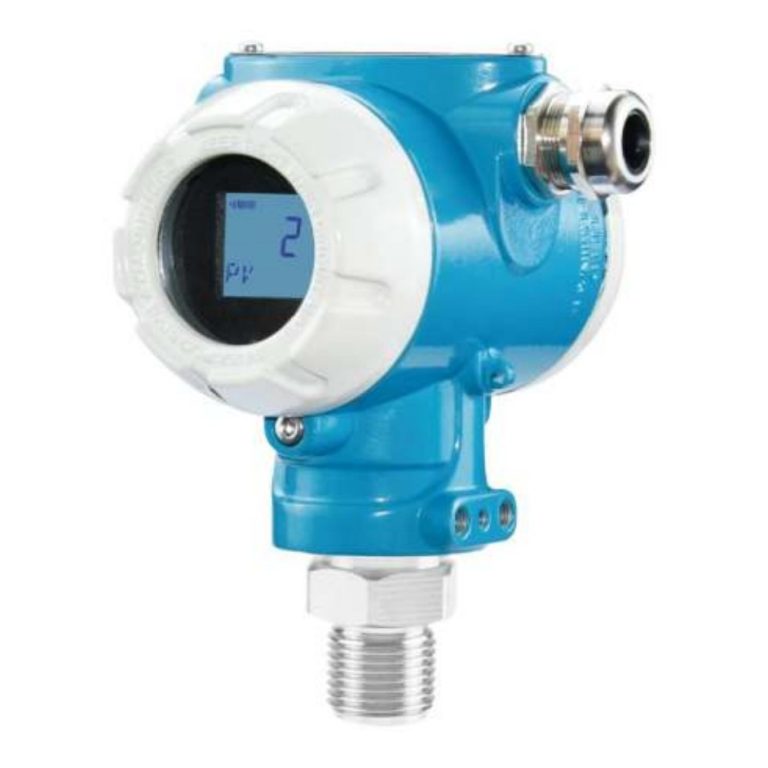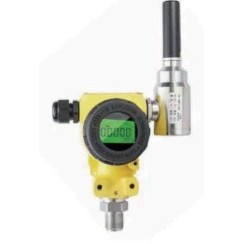
A differential pressure (DP) transmitter measures the difference between two pressures applied to its high-pressure and low-pressure ports, and converts that difference into a standard electrical signal — usually 4-20 mA, often with HART digital communication. Because so many process variables can be expressed as a pressure difference, one DP transmitter design can measure flow, level, density and filter condition. That versatility is why DP transmitters remain among the most widely installed instruments in process plants.
The Working Principle
Inside the transmitter, process pressure reaches a sensing element through two isolating diaphragms and a fill fluid. The isolating diaphragms keep the process medium out of the measuring cell; the fill fluid transmits the pressure to the sensor. The sensing element deforms very slightly in proportion to the pressure difference between the two sides.
Capacitive sensing
In a capacitive DP transmitter, the sensing diaphragm sits between two fixed capacitor plates. As differential pressure deflects the diaphragm, the capacitance on one side increases while the other decreases. The electronics measure this capacitance change, linearize it, compensate it for temperature, and produce the output signal. Capacitive cells are valued for their stability and overload tolerance.
Silicon piezoresistive sensing
In silicon-based designs, pressure strains a micro-machined silicon element whose electrical resistance changes with stress. A bridge circuit converts the resistance change into a voltage, which the electronics digitize and convert into the output signal. Modern single-crystal silicon sensors achieve high accuracy and wide turndown.
What a DP Transmitter Can Measure
Flow
Place a restriction — an orifice plate, nozzle or venturi — in a pipe, and the pressure drops across it in proportion to the square of the flow rate. A DP transmitter connected across the restriction measures that drop, and the control system (or the transmitter itself) calculates flow. This is the classic flow measurement method for steam, gas and liquids.
Level
The pressure at the bottom of a vessel is proportional to the liquid height multiplied by its density. On an open tank, the high-pressure side connects near the bottom and the low side vents to atmosphere. On a pressurized vessel, the low side connects to the vapor space so that vessel pressure cancels out, leaving only the level signal. Remote diaphragm seals with capillaries extend this to hot, viscous or corrosive media.
Filter and equipment monitoring
Connecting a DP transmitter across a filter, strainer or heat exchanger shows how clogged it is: rising differential pressure means rising flow resistance. Maintenance can then be scheduled on condition rather than on a fixed calendar.
Key Specifications to Check
- Differential range and turndown — the span must match your application; wide-turndown smart transmitters cover more applications with fewer spare models.
- Static pressure rating — the cell must survive the line pressure, which is often far higher than the differential being measured.
- Accuracy — smart DP transmitters commonly offer reference accuracy in the 0.075%-0.2% of span class.
- Wetted materials — isolating diaphragms in 316L stainless steel suit most services; Hastelloy or tantalum for aggressive media.
- Output and communication — 4-20 mA with HART is the industry default.
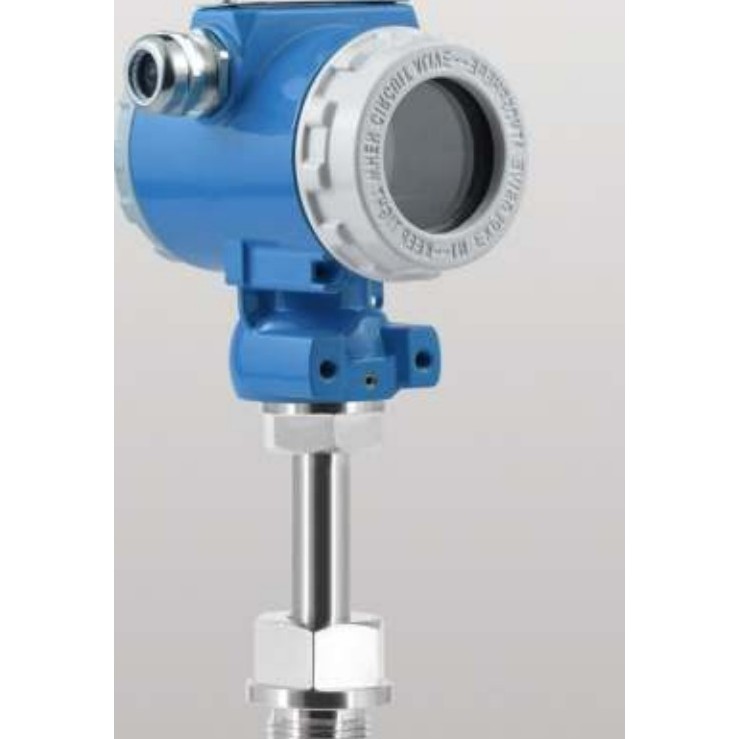
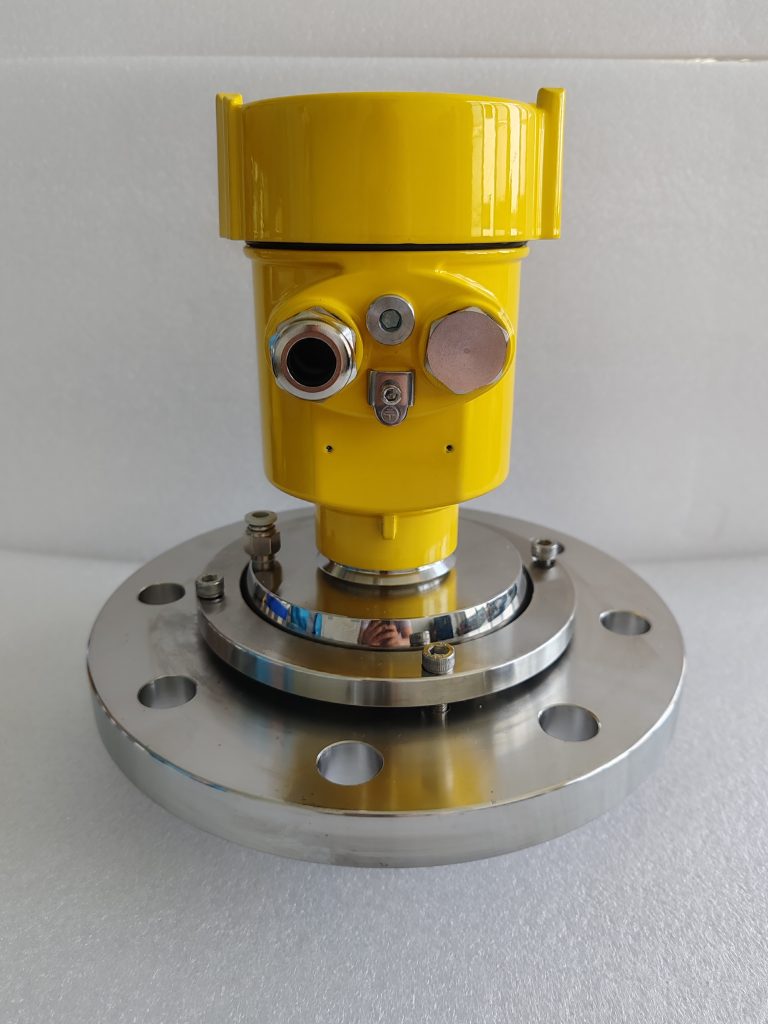
WELK Meters manufactures smart differential pressure transmitters such as the TY813, used for flow, level and filter monitoring in heating, water and power applications, alongside double-flange remote-seal versions for tank level service.
Frequently Asked Questions
What is the difference between a DP transmitter and a pressure transmitter?
A gauge or absolute pressure transmitter measures one pressure against a fixed reference (atmosphere or vacuum). A DP transmitter measures the difference between two process pressures, which lets it infer flow, level and filter condition in addition to pure pressure difference.
Why does my DP flow measurement need square-root extraction?
Because differential pressure across an orifice grows with the square of flow, the signal must be square-rooted to read linear flow. Most modern transmitters and DCS input blocks can perform this; enable it in only one place to avoid double extraction.
Can one DP transmitter handle both level and flow duties?
The same model family usually can, but each installed unit should be ranged, configured and piped for its specific duty. Impulse line layout, three-valve manifolds and seal options differ between flow and level installations.