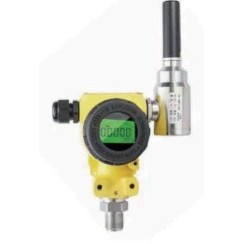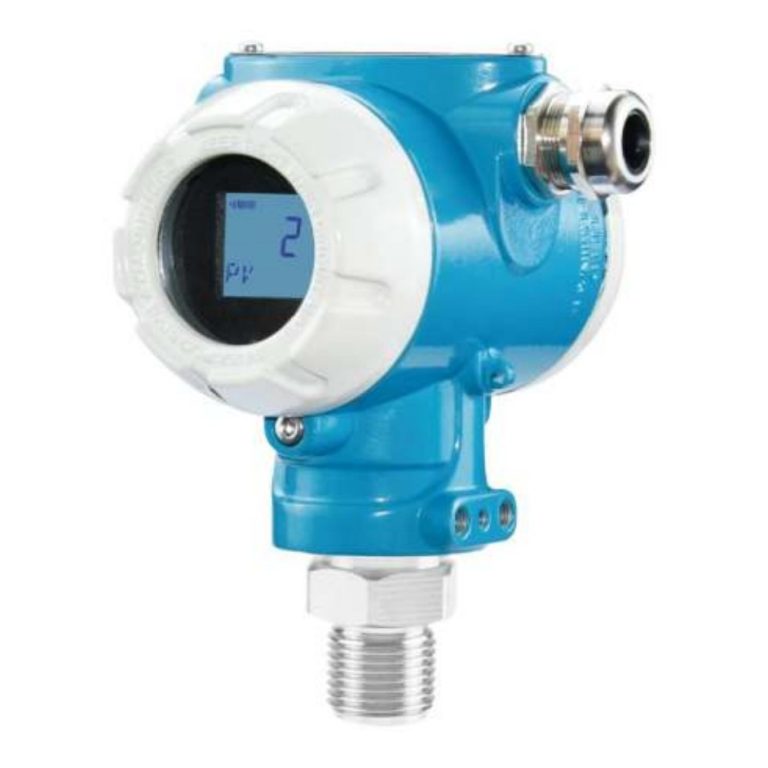
To select a pressure transmitter, you need to define seven parameters: measuring range, accuracy, output signal, process connection, medium temperature, hazardous area (Ex) rating and housing protection class. If you specify these seven points correctly, almost any competent manufacturer can supply a transmitter that works reliably in your application. This guide explains each parameter and the practical rules of thumb our engineers use.
1. Measuring Range
Choose a range so that your normal operating pressure sits at roughly 60-80% of the transmitter’s span. Running too close to the upper limit leaves no margin for spikes; ranging far too wide wastes resolution and accuracy. Also check the overpressure (proof pressure) rating against water hammer and pump dead-head conditions, which routinely exceed normal pressure. Decide whether you need gauge, absolute or compound (vacuum-capable) measurement: gauge pressure suits most utility applications, absolute suits condensers and vacuum processes.
2. Accuracy
Accuracy is stated as a percentage of full span — common classes are 0.5%, 0.25% and 0.075%. Match the class to the job: 0.5% is adequate for pump protection and general monitoring; 0.25% suits most process control; 0.075%-class smart transmitters are for custody-relevant or tightly controlled loops. Remember that long-term stability (e.g. 0.2% per year) and temperature effects matter as much as the reference accuracy figure, especially outdoors.
3. Output Signal
The 4-20 mA two-wire current loop remains the industrial standard: it tolerates long cable runs, and a live zero (4 mA) lets the system detect a broken wire. Smart transmitters add HART communication over the same pair for configuration and diagnostics. Voltage outputs (0-5 V, 1-5 V, 0-10 V) suit short runs inside machinery. RS-485/Modbus suits telemetry and multi-drop installations. Specify the supply voltage too — most loop-powered transmitters accept roughly 12-32 V DC.
4. Process Connection
The transmitter must physically and chemically fit your tapping point. Common threads include M20×1.5, G1/4, G1/2, 1/4 NPT and 1/2 NPT — confirm which standard your plant uses, because mixed threads are a classic source of leaks. For sanitary processes, choose clamp-type diaphragm connections; for viscous, crystallizing or corrosive media, choose flush-diaphragm or flange-diaphragm (remote seal) versions so the medium cannot block the pressure port.
5. Medium Temperature
Every transmitter has two temperature limits: the medium temperature at the diaphragm and the ambient temperature at the electronics. A typical compact transmitter accepts media up to about 120 °C; hotter media require a high-temperature version, a cooling element (siphon for steam), or a remote diaphragm seal with capillary. Always check both limits — a transmitter mounted close to a hot pipe can exceed its ambient rating even when the medium temperature is within specification.
6. Hazardous Area (Ex) Rating
If the installation point is a classified hazardous area, the transmitter must carry a matching protection concept — intrinsically safe (Ex ia) with a safety barrier, or flameproof (Ex d). Specify the required marking explicitly in your inquiry, and verify the certificate the manufacturer actually holds for the destination market. Never assume a rating that is not printed on the datasheet and certificate.
7. Housing and Ingress Protection
Match the housing to the environment: IP65 suits most outdoor industrial installations; submersible or flood-prone locations need higher protection. Consider local display needs (a digital indicator head saves trips with a multimeter), cable entry size, and housing material for corrosive atmospheres.
WELK Meters manufactures compact, explosion-proof, diaphragm-seal and smart pressure transmitters — including the TY812 2088-type pressure transmitter widely used for pump and network monitoring. Send us these seven parameters and we will return a recommendation and quotation within 24 hours.
Frequently Asked Questions
What happens if I oversize the measuring range?
The transmitter will survive, but resolution and effective accuracy suffer because errors are stated as a percentage of full span. A 0.25% transmitter ranged at four times your working pressure behaves like a 1% transmitter at your actual operating point.
Do I need HART if my PLC only reads 4-20 mA?
The 4-20 mA loop works regardless. HART adds value during commissioning and maintenance — re-ranging, diagnostics and loop tests with a handheld communicator — even if the control system never uses the digital data.
How often should a pressure transmitter be recalibrated?
Follow your plant’s quality system; a common starting interval is every 12 months, extended or shortened based on observed drift. Stable modern transmitters with 0.2%-per-year stability often justify longer intervals after the first verification cycles.