80 GHz Radar Level Meter RFQ Checklist for EPC Buyers
Quick Answer: Before you request a quotation for an 80 GHz radar level meter, send the supplier your tank height, blind zone constraints, medium, vapor or foam conditions, nozzle or flange details, output signal, power supply, material expectations, quantity and destination country. Clear RFQ data helps the supplier confirm whether a model such as the 80 GHz Radar Level Meter KJD-80 from WELK’s level instruments range is suitable, or whether another configuration is safer for the application.
For overseas EPC contractors, the biggest delay in radar level meter sourcing is usually not price negotiation. It is incomplete application data. A supplier can only give a meaningful quotation after it understands the vessel geometry, process conditions and installation constraints. That is why buyers preparing a tank farm, water treatment, chemical storage or solids handling package should structure the RFQ first and compare suppliers second.
This guide is written for project buyers who want faster quotation turnaround, fewer technical clarifications and lower sample risk when sourcing from China.
Why EPC buyers lose time on radar level meter quotations
Many inquiry emails only say, “We need a radar level meter for a tank.” That is too broad for a factory-direct supplier to confirm model fit. Radar level measurement depends on the surface condition, mounting arrangement, obstruction risk and output requirements. If those details are missing, the supplier has to ask multiple follow-up questions before it can even judge whether radar is the right technology.
For multi-site EPC projects, this creates a chain reaction: the procurement team waits for process data, the supplier waits for drawings, and the quotation arrives too late for internal comparison. A structured RFQ avoids that cycle and makes it easier to compare WELK Meters with other shortlisted suppliers on the same technical basis.
RFQ checklist: what to send before you ask for price
| RFQ item | Why the supplier needs it | Example buyer input |
|---|---|---|
| Application and industry | Helps the supplier understand whether the project is water, wastewater, chemical, food, bulk solids or utilities. | Municipal wastewater equalization tank |
| Medium and surface condition | Foam, vapor, condensation, turbulence and dust all affect sensor selection and mounting advice. | Process water with light foam, indoor tank |
| Measuring range and dead zone limits | Confirms whether the listed 80 GHz radar option can cover the distance and near-field requirements. | 0-18 m operating range, alarm at 17.5 m |
| Tank type and dimensions | Allows the supplier to evaluate geometry, roof type and internal obstructions. | Vertical steel tank, 2.8 m diameter, fixed roof |
| Nozzle, flange or threaded connection | Determines mounting compatibility and whether a compact threaded or flanged version is more practical. | DN80 flange on top nozzle, 180 mm nozzle height |
| Output signal and power supply | Prevents mismatch with PLC, DCS or remote telemetry requirements. | 4-20 mA with RS485, 24 VDC |
| Wetted material expectations | Important when the medium is corrosive or the buyer needs a material review. | Confirm compatibility for mildly corrosive liquid |
| Quantity, sample need and destination | Supports packaging, sample planning and export quotation preparation. | 2 samples, then 20 units for Saudi Arabia |
How to choose between compact and flanged radar options
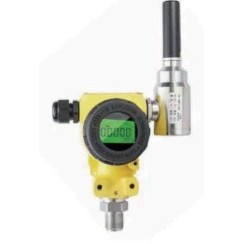
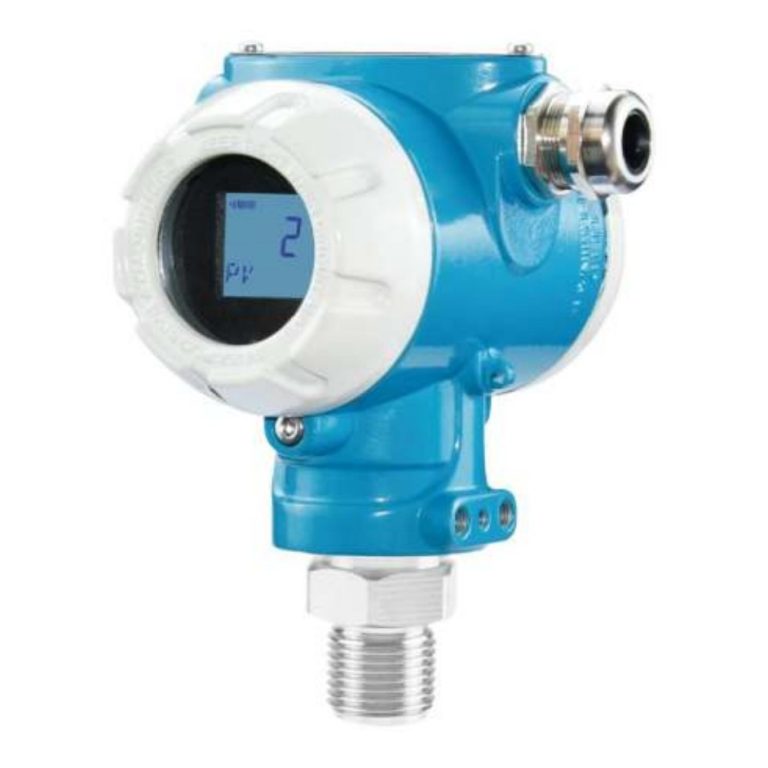
WELK Meters currently shows a flanged KJD-80 radar level meter on the product page and compact threaded radar models in its media library. From a procurement angle, the key issue is not which version looks simpler. The key issue is which connection style matches the tank nozzle, mechanical standard and maintenance access available on your site.
- Use a flanged arrangement when the project drawing already specifies flange size and pressure class, or when the nozzle design needs a more defined mechanical interface.
- Use a compact threaded arrangement only after confirming thread standard, available headroom and whether the process environment is suitable for that mounting style.
- When tanks have agitators, ladders, internal beams or narrow nozzles, send drawings or photos so the supplier can comment on aiming and obstruction risk before quotation.
If your team is still comparing technologies, review the wider product archive and the level instrument category first. In some tanks, the correct commercial decision may be to compare radar with ultrasonic or hydrostatic options before finalizing the RFQ.
Questions to ask any China radar level meter supplier
Price is only one part of supplier evaluation. Overseas buyers should also ask:
- Can your engineer review our tank drawing or field photo before quotation?
- What application data must we confirm before sample or mass order approval?
- Can you align output, power supply and process connection with our project specification?
- How do you handle OEM or private-label requirements if this becomes a distributor or package standard item?
- What export documents or packing details should we confirm separately for our destination country?
These questions help buyers compare response quality, not just unit cost. They also reduce the risk of ordering a technically incomplete configuration.
Suggested workflow for sample approval and bulk quotation
- Prepare one RFQ sheet with process data, quantity and destination country.
- Attach tank drawings, nozzle details and any available installation photos.
- Ask the supplier to confirm missing technical items before issuing a formal quote.
- If the application is sensitive, discuss a sample or pilot quantity before the bulk order.
- Freeze the approved connection, signal, power and material details before release of the purchase order.
- For repeat projects, keep the approved RFQ file as the reference for reorders and site-to-site standardization.
This workflow is especially useful when one EPC team is buying for multiple tanks or multiple end users and needs consistent documentation across the package.
How WELK Meters can support the RFQ stage
Based on the public information on the WELK Meters homepage, the company positions itself as a factory-direct manufacturer of pressure, temperature, level, flow and wireless telemetry instruments in Baoding, Hebei, China. The site also emphasizes engineer-led quotation support, small MOQ and OEM or ODM service for overseas buyers.
For radar level meter procurement, that matters because buyers often need clarification before the quotation is comparable. Instead of only asking for a model number, send your application details through the contact page and ask the engineering team to confirm whether the listed radar model, another level instrument or a customized connection is the better fit for the project.
FAQ
Do I need the exact model number before I send an RFQ?
No. If you do not know the final model yet, send the application data first. A qualified supplier should help you narrow the model based on tank conditions and signal requirements.
What is the most important attachment for a radar level meter inquiry?
A tank drawing or clear field photo is usually the most useful attachment because it helps the supplier review nozzle position, obstructions and available mounting space.
Should I ask for radar only, or compare other level technologies too?
If the process conditions are still open, compare technologies during the RFQ stage. Radar may be the right choice, but the commercial decision is stronger when the supplier has reviewed the application against other level options.
Can I request samples before a bulk order?
Yes, many overseas buyers use a sample or pilot quantity to confirm signal integration, mechanical fit and documentation flow before approving a larger order. Sample feasibility should be discussed with the supplier during quotation.
What should distributors or private-label buyers confirm early?
They should confirm branding expectations, label requirements, repeat-order consistency and whether the supplier can keep the same approved configuration for future orders.
Send your RFQ to WELK Meters: Include your medium, measuring range, tank drawing, process connection, output signal, power supply, material concerns, quantity and destination country through the contact page. That gives the supplier enough information to review the application and return a more usable quotation.
Instrument specifications, certifications, materials, prices, stock status and lead times must be confirmed with WELK Meters before ordering. Any third-party brand names, standards or model references are used only for application or compatibility identification unless otherwise stated.